WiFi QR code generator
Generate easy & customizable WiFi QR codes in seconds.

WiFi QR Code Generator: Connect to WiFi in One Scan
Typing long WiFi passwords is frustrating. Sharing them out loud in a busy café or hotel lobby is worse. With a WiFi QR code, your guests, customers, students, or team can connect to your network instantly — no typing, no mistakes, no asking "what's the WiFi?" again.
You can set these up in co-working spaces, rental properties, event venues, and client offices. Once the code is printed and placed, it handles WiFi onboarding for every visitor from that point forward. Zero staff involvement, zero support tickets.
What Is a WiFi QR Code?
A WiFi QR code stores all the credentials needed to connect to a wireless network: the SSID (network name), encryption type, and password. When scanned, it auto-fills those details on the user's device and connects them to the network — no manual entry required.
Think of it as a one-tap login for WiFi. The user points their camera at the code, taps the notification, and they're connected.
Most Android devices (version 10+) and iPhones (iOS 11+) support WiFi QR codes natively through the built-in camera app. No third-party app needed.
WiFi QR Code vs. Other QR Types
WiFi QR codes are unusual compared to other QR types because they trigger a device action (joining a network) rather than opening an app or a webpage. Here's how they compare:
| QR Code Type | What Happens on Scan | Requires Internet? | Best For |
| WiFi QR | Auto-connects device to WiFi network | No (it provides the connection) | Guest WiFi, venues, rentals, events |
| URL QR | Opens a webpage | Yes | Landing pages, forms, product links |
| Text QR | Displays plain text on screen | No | Codes, instructions, IDs |
| Phone QR | Opens dialer with number ready | No | Voice calls, hotlines, support |
| vCard QR | Saves contact to phone | No | Networking, business cards |
The key difference: a WiFi QR code is the only type that doesn't require an existing internet connection to be useful. It provides the connection. That makes it the logical first QR code to place in any venue — once people are connected, they can use the other types.
What Gets Encoded
WiFi QR codes use a specific format that phones recognize:
WIFI:T:WPA;S:MyNetworkName;P:MyPassword;H:false;;
Where:
T:— Encryption type (WPA, WPA2, WEP, or nopass for open networks)S:— SSID (the network name, case-sensitive)P:— Password (case-sensitive)H:— Whether the network is hidden (true/false)
You don't need to write this string manually — the generator handles it. But understanding the format helps when troubleshooting: if the SSID or password has special characters, they need to be escaped correctly.
How to Create a WiFi QR Code (Step-by-Step)
Here's the process using QRCodeDynamic. It takes under a minute.
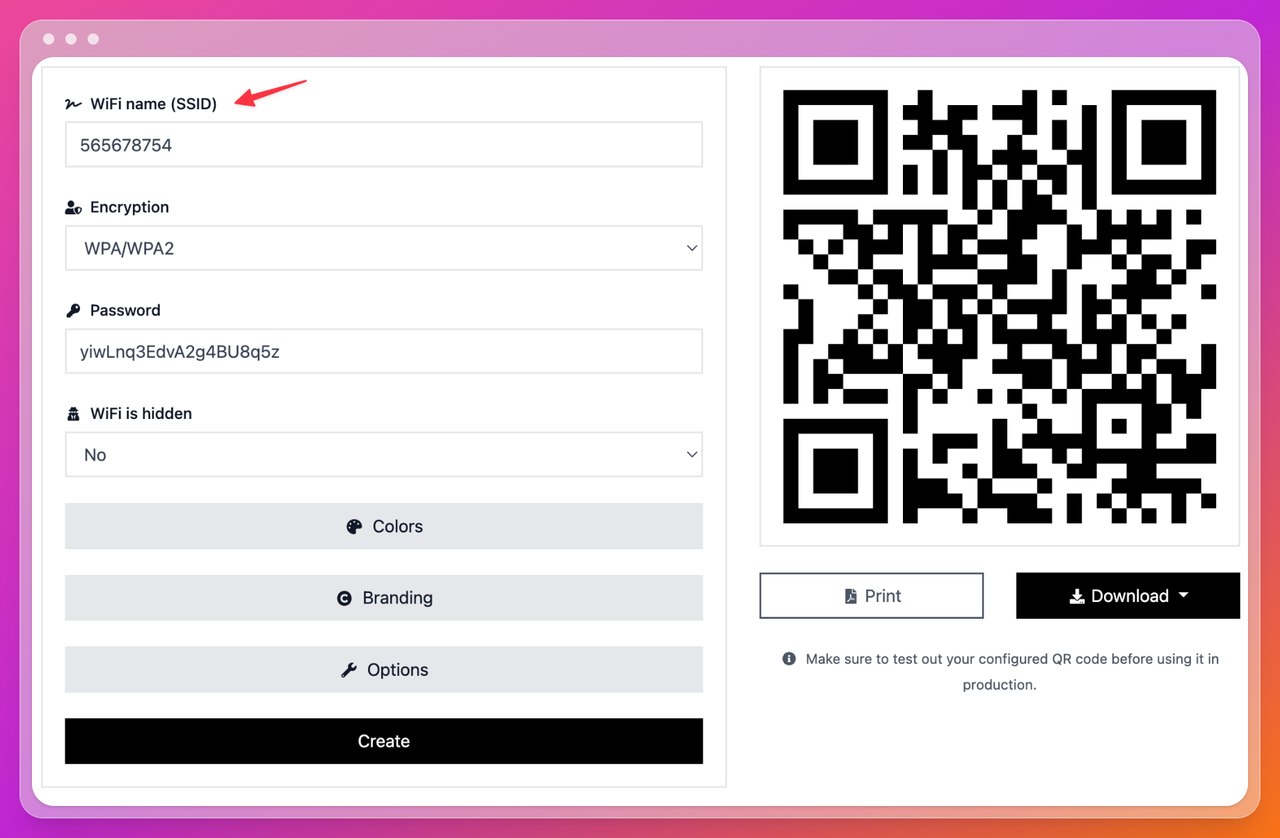
Step 1: Enter Your WiFi Details
Open the generator and select WiFi from the QR type list. Fill in:
- SSID (network name): Exactly as it appears on your router, including capitalization. "Cafe_Guest" and "cafe_guest" are different networks.
- Password: Case-sensitive. Copy it from your router admin panel to avoid typos.
- Encryption type: WPA/WPA2 for most modern routers. WPA3 if your network supports it. WEP only for legacy hardware (and consider upgrading).
- Hidden network: Toggle on if your SSID doesn't broadcast.
Step 2: Customize Design & Branding
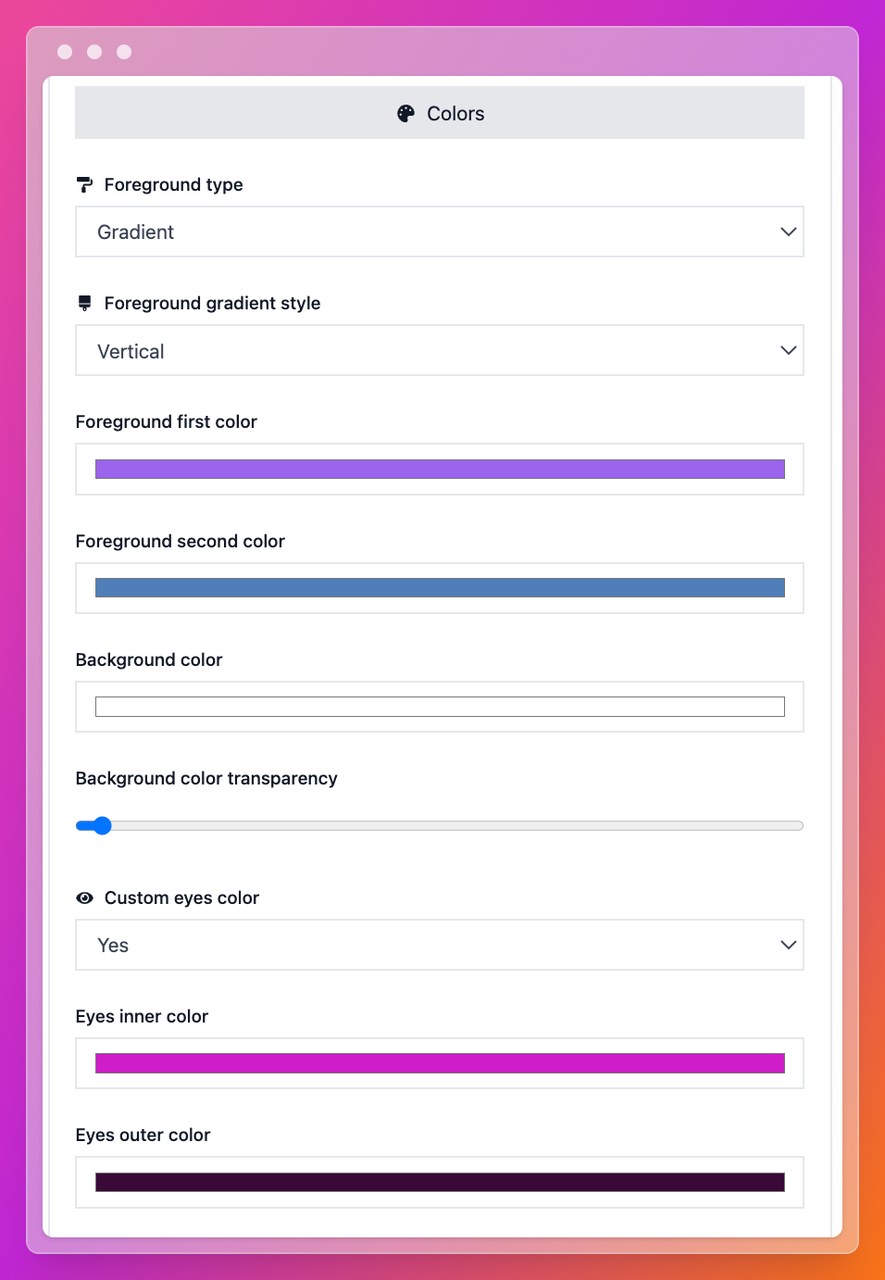
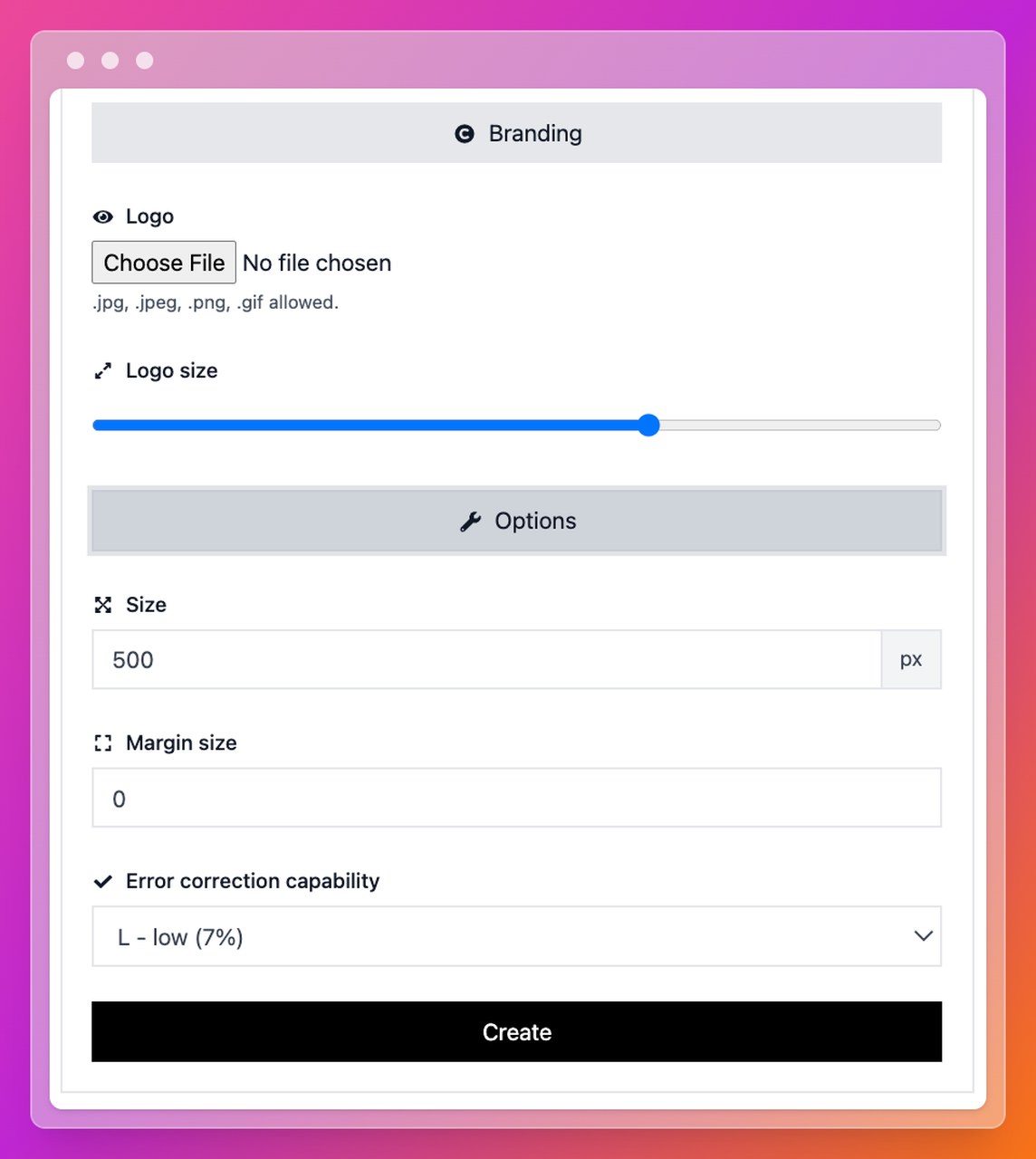
Make the code match your brand:
- Use high-contrast colors (dark code on light background)
- Add your logo (small, centered, under 30% of code area)
- Choose a QR code CTA frame like "Scan to Connect"
- Adjust the quiet zone (margin) for reliable scans
Step 3: Download & Test
- Download PNG for screens or SVG/PDF for print
- Scan on at least one iPhone and one Android device
- Confirm both devices connect to the correct network
- Test in the actual environment where you'll place the code (lighting, distance, surface)
Avoid low contrast and cramped layouts — both reduce scan success. If the code doesn't connect on the first try, double-check the SSID spelling and password capitalization.
That's it. Print it and deploy it where people connect most.
WiFi QR Code Security Considerations
A WiFi QR code embeds your network credentials — which raises a fair question: is that safe?
During normal use, the password isn't visible. When someone scans the code, their phone reads the WIFI: string and passes it to the operating system's network settings. The password appears as dots or isn't shown at all. The user connects without ever seeing the actual characters.
However, the password can be extracted. Anyone with a QR code reader app (not just a camera) can decode the full WIFI: string and read the password in plain text. This is a low risk for guest networks but a real consideration for sensitive environments.
Best practices for security:
- Use a dedicated guest network. Don't put your primary business network on a QR code. Create a separate guest SSID with its own password and bandwidth limits.
- Rotate passwords periodically. Change the guest WiFi password monthly (or more often for high-security environments) and print a new QR code. Since WiFi QR codes are static, this means reprinting.
- Use WPA2 or WPA3. Never use WEP — it's trivially crackable regardless of the QR code. WPA3 provides the strongest encryption currently available.
- Don't display the password alongside the code. Let the QR handle the connection. Printing the password next to it defeats the purpose of the code and exposes credentials to anyone walking by.
- Segment your network. Guest WiFi should be isolated from internal resources (printers, file servers, POS systems). This is a router configuration, not a QR code feature, but it's essential if you're sharing access broadly.
Best Practices for WiFi QR Codes
Match Encryption Correctly
The encryption type in the QR code must match your router's settings exactly. If your router is set to WPA2 but the QR code says WPA, some devices won't connect. Check your router's admin panel and match the setting. Most modern networks use WPA2 or WPA2/WPA3 mixed mode.
Sizing
| Scanning Distance | Minimum QR Size | Typical Placement |
| 15 cm (6 in) | 1.5 cm | Table stickers, desk cards |
| 30 cm (12 in) | 3 cm | Counter signs, menu cards, welcome guides |
| 1 m (3.3 ft) | 10 cm | Lobby signs, wall posters |
| 3 m (10 ft) | 30 cm | Conference room displays, storefront windows |
Rule: minimum QR size = scanning distance / 10. For digital use, 180 x 180 px minimum.
Design Rules
- Contrast: Dark foreground on light background. The QR pattern needs to be clearly distinguishable.
- Quiet zone: Leave a clear margin of at least 4 modules around the code.
- Logo: Small, centered, and not covering the finder patterns (corner squares).
- Avoid glare. If printing on glossy surfaces (laminated signs, glass), test scan reliability before committing. Matte finishes scan better.
Placement Tips
Place the WiFi QR code where people naturally look for connectivity:
- At eye level near entrances and reception desks
- On tables, counter signs, and menu cards
- Inside welcome packets, rental guides, and room directories
- On conference room doors and meeting room screens
Always add a CTA label: "Scan to Connect to WiFi" or "Free WiFi — Scan Here." Without a label, people might think it's a URL or a menu link.
Static Nature of WiFi QR Codes
WiFi QR codes are inherently static. The SSID, password, and encryption type are encoded directly into the pattern — there's no redirect layer. This means you can't change the password after printing without generating and printing a new code.
If you need to rotate passwords regularly, there's a workaround: create a dynamic URL QR code that links to a hosted page displaying the current WiFi credentials (or embedding a fresh WiFi QR code). You can update the page content any time without reprinting the QR code. The tradeoff: the user needs an existing internet connection to load the page, which defeats the purpose if they have no connectivity at all.
For most venues, the practical approach is to keep the guest WiFi password stable and reprint QR codes only when you change it. If you rotate passwords monthly, keep a batch of pre-printed codes ready.
Use Cases for WiFi QR Codes
Cafés & Restaurants
Table stickers, counter signs, or menu inserts with "Scan to Connect" replace the daily ritual of staff reciting the password. Customers connect in seconds without interrupting the flow. For cafés that change passwords daily (to manage bandwidth), print a small daily code on a chalkboard insert or table card.
Offices & Co-Working Spaces
Print WiFi QR codes on lobby signs, meeting room doors, and guest check-in materials. Separate codes for guest and internal networks keep security clean. Co-working spaces can print codes on desk cards so new members connect during their first minute without a support interaction.
Short-Term Rentals (Airbnb, Vrbo)
Frame the WiFi QR code in the living room, include it in the welcome guide, and stick it on the fridge. Guests scan on arrival instead of hunting through the guidebook for the password. This is one of the most common Airbnb host complaints resolved by a single printed code — no more late-night messages asking for the WiFi details.
Schools & Libraries
Study zones, computer labs, and staff areas can each have their own QR code linking to the appropriate network. Separate codes for student WiFi, faculty WiFi, and event WiFi keep access controlled. Print them on posters near entrances and on desk cards at study stations.
Events & Conferences
Print WiFi QR codes on event badges, booth signage, press kits, and VIP lounge materials. Large events with thousands of attendees can't rely on staff distributing passwords. A code on the badge lanyard card or a poster at each entrance handles it at scale. For multi-day events with rotating passwords, print new codes each morning and post them on signage.
Hotels & Hospitality
Place WiFi QR codes on room keycards, nightstand cards, elevator panels, and lobby signage. Guests connect without calling the front desk. For hotels with per-room WiFi credentials, print a unique code on each room's welcome card during turnover.
Healthcare Waiting Rooms
Patients waiting for appointments appreciate guest WiFi access. A framed QR code in the waiting room connects them without staff involvement. Use a separate guest network isolated from clinical systems for obvious security reasons.
Troubleshooting WiFi QR Codes
- Device connects but no internet: The WiFi credentials are correct (the device joined the network) but the router may not be providing internet access. Check the router, ISP connection, and any captive portal that might be blocking traffic until the user agrees to terms.
- Scan doesn't trigger a connection prompt: The phone may not support native WiFi QR scanning. iPhones require iOS 11+. Some older Android phones need a third-party QR scanner app. Test on the specific devices your audience is likely to use.
- Wrong network or connection failure: The SSID in the QR code doesn't match the router's SSID exactly. Check capitalization, spaces, and special characters. "CafeWiFi" and "Cafe WiFi" (with a space) are different networks.
- Password rejected: WiFi passwords are case-sensitive. "Summer2026" and "summer2026" will produce different results. Copy the password directly from your router admin panel to eliminate typos.
- Code doesn't scan at all: Check print size (too small), contrast (too low), quiet zone (too narrow), or surface glare (glossy print). Reprint with higher contrast and test from the expected scanning distance.
- Encryption mismatch: If the QR code specifies WPA but the router uses WPA2, some devices will fail to connect. Verify the encryption type matches your router's settings exactly.
FAQs About WiFi QR Codes
Do WiFi QR codes work on iPhone?
Yes. iPhones running iOS 11 or later support WiFi QR codes natively through the built-in camera app. Scan the code, tap the notification that appears, and the phone connects to the network. No third-party app needed.
Can someone see my WiFi password in the QR code?
During normal scanning, no — the phone reads the credentials and passes them to the network settings without displaying the password. However, anyone with a QR code reader app (not the camera) can decode the full WIFI: string and read the password in plain text. For guest networks this is a low risk. For sensitive networks, don't use a QR code — use manual password entry or enterprise authentication (802.1X).
What if I change my WiFi password?
You'll need to generate and print a new QR code. WiFi QR codes are static — the credentials are encoded directly into the pattern and can't be updated after creation. If you rotate passwords frequently, keep a template ready in the generator so reprinting takes seconds.
Can I hide the SSID in the QR code?
Yes. Toggle the "Hidden network" option in the generator. This sets the H:true flag in the encoded string, telling the phone to connect to a non-broadcasting network. The SSID is still encoded in the QR code — it just tells the device not to expect to find it in the visible network list.
Does a WiFi QR code need internet to work?
No — and that's what makes it unique among QR types. The scan itself works offline (the camera reads the pattern locally), and the connection happens via the device's WiFi radio. No existing internet connection is required. The QR code provides the path to connectivity.
Can I use a WiFi QR code for WPA3 networks?
Support for WPA3 in WiFi QR codes is growing but not yet universal. Most generators (including QRCodeDynamic) support WPA/WPA2 encoding. For WPA3 networks, some devices handle the connection correctly when the QR specifies "WPA" as the encryption type, since WPA3 is backward-compatible with WPA2 in transition mode. Test with your specific router and device combination before printing.
Can I create one QR code for multiple networks?
No. Each WiFi QR code encodes exactly one network (one SSID, one password, one encryption type). If you have separate guest and staff networks, create a separate code for each and label them clearly. For venues with multiple floors or zones on different networks, print the appropriate code for each area.
How do I share WiFi with devices that can't scan QR codes?
Laptops without cameras, older phones, and some IoT devices can't scan QR codes. For these, provide the SSID and password in plain text alongside the QR code — either on the same sign (in smaller text below the code) or on a separate card available at the front desk. The QR code handles the majority of users; the plain text catches the rest.
Can I track how many people scanned my WiFi QR code?
Not with a standard WiFi QR code — it's static with no redirect layer. If you need scan analytics, use a dynamic URL QR code that links to a page containing WiFi instructions or an embedded WiFi QR code. The dynamic redirect tracks scans, but the user needs an existing connection to load the page — which creates a chicken-and-egg problem. For most venues, router-level analytics (connected devices count) is a better way to measure usage.