PayPal QR code generator
Generate easy & customizable PayPal QR codes in seconds.
PayPal QR Code Generator: Accept Payments in One Scan
Whether you're selling handmade crafts at a market, running a small business, or collecting donations at an event, a PayPal QR code makes it easy to get paid instantly — no cash, card readers, or payment links needed.
With just a scan, your customers or supporters can pay you directly via PayPal using their phone. I've used these at pop-up events, on invoices, and embedded on product packaging — and the conversion from "interested" to "paid" is noticeably faster when the checkout is one scan away.
In this guide, I'll walk you through how a PayPal QR code works, how to create one in seconds, and where to use it so you get paid faster with less friction.
What Is a PayPal QR Code?
A PayPal QR code is a scannable code that links directly to a pre-filled PayPal checkout experience. When scanned, it opens the PayPal app (or website) and allows the user to make a payment instantly.
You can configure it for three payment types:
- Buy Now — direct purchase of a specific product or service
- Add to Cart — adds an item to PayPal's cart for multi-item purchases
- Donation — one-time or recurring contributions
The code can include fixed fields like price, currency, product name, and optional thank-you/cancel redirect URLs. When someone scans it, PayPal handles the rest — authentication, payment processing, and confirmation.
How a PayPal QR Code Works
Under the hood, the QR code embeds a PayPal payment URL. Here's what happens:
- The user scans the code with their phone camera.
- Their browser or PayPal app opens a checkout page with your email, product name, amount, and currency pre-filled.
- They log into PayPal (or pay as a guest with a card, where supported).
- They confirm payment. You receive the funds in your PayPal account.
Example URL encoded in the QR:
https://www.paypal.com/cgi-bin/[email protected]&amount=15.00¤cy_code=USD&item_name=Product+Name
The generator builds this URL from your form inputs — you just fill in the fields and the tool constructs the payment link automatically.
How to Create a PayPal QR Code (Step-by-Step)
Here's the process using QRCodeDynamic. It takes under a minute.
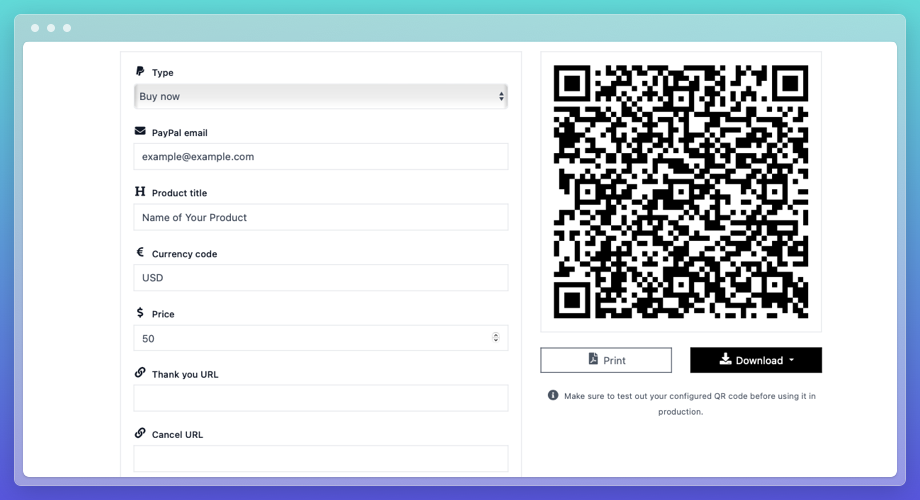
Step 1: Select Payment Type
Choose between Buy Now, Add to Cart, or Donation depending on your use case.
Step 2: Enter PayPal Details
Fill in your payment information:
- PayPal email: The email address linked to your PayPal business or personal account
- Product title (or donation description): What the payer will see on the checkout screen
- Currency code: USD, EUR, GBP, AUD, CAD, etc.
- Amount: Fixed price for products. For donations, you can leave this blank to let the donor choose
Step 3: Add Thank You & Cancel URLs (Optional)
Thank You URL: Where the user goes after a successful payment (e.g., a confirmation page or a "thanks for your order" screen). Cancel URL: Fallback page if they cancel the checkout. Both are optional but improve the user experience, especially for e-commerce.
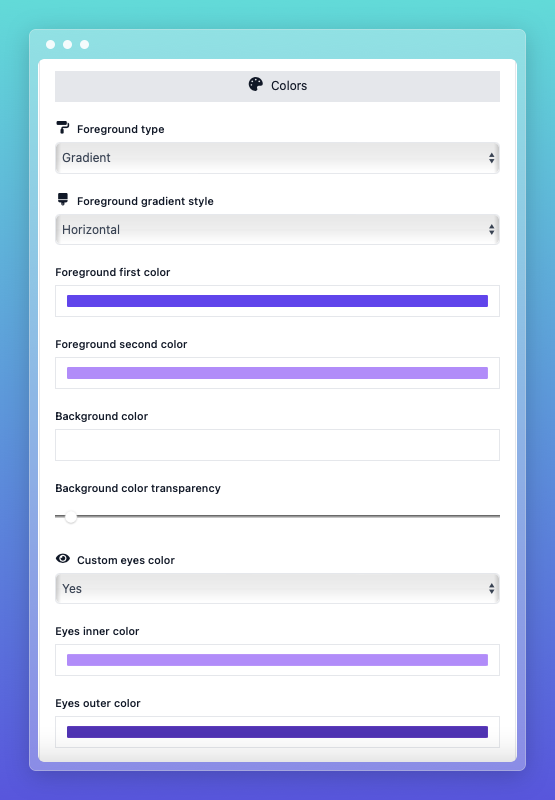
Step 4: Customize the Design
Make the code recognizable and on-brand:
- Choose high-contrast colors (dark foreground on light background)
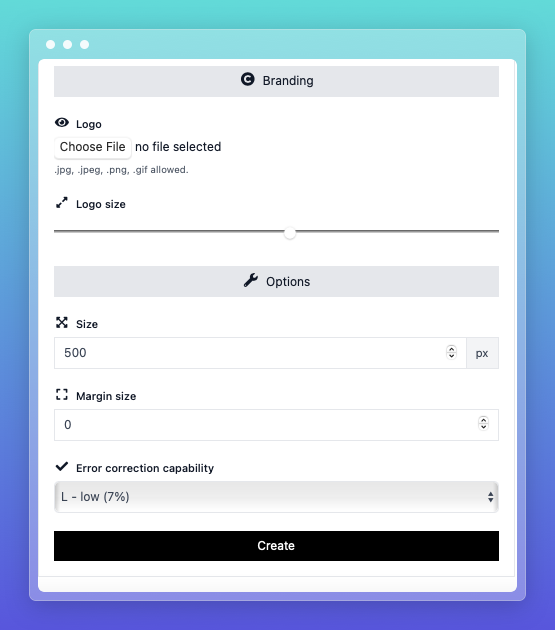
- Add your logo (small, centered, under 30% of code area)
- Pick a QR code CTA like "Pay Now" or "Donate via PayPal"
- Adjust corner shapes and dot styles for a branded look
Step 5: Download & Test
- Download as PNG for websites and screens
- Use SVG or PDF for print (signage, receipts, packaging)
- Scan with your phone and complete a test payment to confirm the amount, currency, and product name are correct
Always test the full payment flow before deploying. A code that scans but shows the wrong amount or a misspelled product name damages trust.
Best Practices for PayPal QR Codes
Sizing for Distance
| Scanning Distance | Minimum QR Size | Typical Placement |
| 15 cm (6 in) | 1.5 cm | Receipts, invoices, product tags |
| 30 cm (12 in) | 3 cm | Counter signs, table tents, menus |
| 1 m (3.3 ft) | 10 cm | Posters, booth signage, checkout displays |
| 3 m (10 ft) | 30 cm | Storefront windows, banners |
Rule: minimum QR size = scanning distance / 10. For digital use, 180 x 180 px minimum.
Design Rules
- Contrast: Dark foreground on light background for reliable scanning
- Quiet zone: Clear margin of at least 4 modules around the code
- Logo: Small, centered — don't cover the finder patterns
- CTA label: "Scan to Pay," "Pay via PayPal," or "Donate Here" — tell people exactly what happens when they scan
Test the Full Payment Flow
Before printing or publishing, scan the code and complete a real transaction (even if it's $0.01 to yourself). Confirm that:
- The correct PayPal email receives the payment
- The product name and amount display correctly on the checkout screen
- The Thank You and Cancel URLs redirect properly
- The experience works on both iPhone and Android
Use Cases for PayPal QR Codes
Pop-Up Shops & Markets
Display a PayPal QR code at your booth or table so customers can pay without you carrying a card reader. A simple acrylic stand with "Scan to Pay — $15" handles transactions while you focus on talking to the next customer. For markets where items have different prices, print separate codes for each product or leave the amount blank so the customer enters it.
Cafés, Restaurants & Food Stalls
Table tents, counter signs, or menu inserts with "Pay via PayPal" give customers a contactless option alongside cash and cards. For food stalls at events or farmers markets, a PayPal QR code eliminates the need for mobile card terminals that depend on patchy cellular signal.
Freelancers & Consultants
Add a PayPal QR code to your invoices, proposals, or email signature. Clients scan and pay without navigating to a payment page or typing your email into PayPal manually. For fixed-rate services, set the amount in the code. For hourly work, leave the amount blank and reference the invoice total.
Nonprofits & Fundraising
Print donation QR codes on event signage, flyers, direct mail, and social media posts. Choose the "Donation" type to let donors enter their own amount. PayPal supports recurring donations, so you can direct donors to a recurring billing flow for ongoing support. A physical QR code at a fundraising gala or charity run captures contributions from people who might not go home and donate later.
E-commerce & Product Packaging
Include a PayPal QR code on product inserts, packaging, or thank-you cards. "Love this product? Buy another — scan to reorder" with a fixed amount and product name pre-filled turns a packaging insert into a direct sales channel. For returns and refunds, a separate QR code linking to your support email or form keeps the process smooth.
Creators & Artists
Embed PayPal QR codes on prints, gallery cards, merchandise displays, and tip jars. An artist at a craft fair can have a code per item: "This print — $25, Scan to Buy." Streamers and content creators use them on social bios and overlays for tips and support payments.
Personal Trainers, Tutors & Coaches
Print a PayPal QR code on your business card or share it digitally after a session. Clients scan and pay for the session immediately rather than "I'll transfer it later" (which often means never). For recurring sessions, direct them to PayPal's subscription flow through the donation type.
PayPal QR Code Limitations to Know
PayPal QR codes are fast and familiar, but they come with tradeoffs worth understanding before you deploy:
| Advantage | Limitation |
| Globally trusted brand | Transaction fees on every payment (2.9% + fixed fee, varies by region) |
| Fast scan-to-pay experience | Payer needs a PayPal account (or guest checkout where available) |
| Customizable fields (product, amount, currency) | Not designed for high-volume POS — better for low-to-medium transaction volume |
| No hardware required | Static once printed — can't change amount or product after creation |
| Supports donations with recurring option | Requires internet on the payer's device |
For most small businesses, freelancers, and event vendors, these limitations are acceptable. If you need a full POS system with inventory management and receipt printing, PayPal QR codes aren't the right tool — use a dedicated POS solution. But for quick, trusted, no-hardware payments? They're hard to beat.
Static vs. Dynamic PayPal QR Codes
PayPal QR codes are typically static — the payment URL is encoded directly into the pattern. This makes them reliable and simple but fixed after creation.
| Feature | Static PayPal QR | Dynamic (URL-based) |
| Edit after printing | No | Yes (update the redirect destination) |
| Scan analytics | No | Yes (time, device, location) |
| Works without redirect | Yes (opens PayPal directly) | No (redirect adds a step) |
| Change amount/product later | No (generate new code) | Yes (update redirect URL) |
| Cost | Free | Paid tiers common |
For fixed-price products and permanent donation links, static is the right choice — faster, simpler, no redirect dependency. For campaigns where prices change, promotions rotate, or you need scan analytics, use a dynamic URL QR code that redirects to your PayPal checkout link. You can update the redirect any time without reprinting.
FAQs About PayPal QR Codes
Do customers need a PayPal account to pay?
In most cases, yes — the payer needs to log into PayPal to complete the transaction. In some regions, PayPal supports guest checkout, which lets users pay with a credit or debit card through PayPal's interface without creating an account. Availability depends on the payer's country and PayPal's current policies. If your audience is unlikely to have PayPal accounts, consider offering an alternative payment QR code alongside.
Can I use PayPal QR codes for recurring donations?
Yes. Choose the "Donation" type when creating the code. PayPal's donation flow supports recurring billing — the donor can opt into a monthly or custom-interval contribution during checkout. The QR code itself triggers the initial donation; PayPal handles the recurring schedule on their end.
Are there fees for PayPal QR code payments?
Yes. Standard PayPal transaction fees apply — typically 2.9% + a fixed fee per transaction, though rates vary by country, currency, and account type. PayPal may also charge different rates for international transactions or micro-transactions. Check PayPal's current fee schedule for your region before setting prices.
Can I change the amount after printing?
Not with a static QR code — the amount is embedded in the PayPal URL. To change it, generate a new code with the updated amount and reprint. If you need flexibility (e.g., seasonal pricing, rotating promotions), use a dynamic URL QR code that redirects to a PayPal link you can update without reprinting.
Is a PayPal QR code secure?
Yes. The QR code contains only the public checkout URL — your PayPal email and the payment parameters. It doesn't expose your PayPal credentials, password, or account details. The actual payment happens on PayPal's secure checkout page, which handles authentication and encryption. The payer authenticates with their own PayPal login.
Can I accept payments in multiple currencies?
Each QR code is set to one currency (USD, EUR, GBP, etc.). If you serve customers in different currency zones, create separate codes for each currency and label them accordingly. PayPal handles currency conversion on their end if a payer's account is in a different currency than the one specified in your code, though conversion fees may apply.
What happens if the payer cancels the checkout?
If you set a Cancel URL, the user is redirected to that page. If you didn't set one, PayPal shows its default cancellation screen. No payment is processed, and no fees are charged. Setting a Cancel URL that offers an alternative (e.g., "Changed your mind? Here's our contact page") is better than letting the user hit a dead end.
Can I use PayPal QR codes offline?
The scan works offline (the camera reads the URL from the pattern), but completing the payment requires an internet connection — the payer needs to load PayPal's checkout page and authenticate. If you're at an outdoor market or venue with poor signal, this can be a problem. Make sure your selling location has reliable mobile data or WiFi, or offer cash as a backup.
Can I track how many people scanned my PayPal QR code?
Not with a static PayPal QR code — there's no tracking layer between the scan and PayPal's checkout. You can see completed payments in your PayPal dashboard, but you won't know how many people scanned without paying. For scan-level analytics, use a dynamic URL QR code that redirects to your PayPal link. The dynamic redirect tracks scans; PayPal tracks completed payments.