How to Create a QR Code for WhatsApp Group


On this page
- How to Create a QR Code for WhatsApp Group
- Method 1: Create a QR Code Inside WhatsApp
- Method 2: Create a Branded QR Code with QR Code Dynamic
- WhatsApp Business: Same Flow, Different Path
- Step-by-Step in WhatsApp Business
- Comparing Native WhatsApp QR Codes vs. Third-Party Generators
- Troubleshooting Common WhatsApp Group QR Code Issues
- Best Practices for WhatsApp Group QR Code Creation and Sharing
- How to Use a WhatsApp Group QR Code Effectively
- For Group Admins
- For New Members
- Real-World Examples
- WhatsApp Group Admin Controls: Reset Link and Approve New Participants
- Resetting the Group Invite Link
- Approve New Participants Toggle
- WhatsApp QR Scams to Watch For
- Communities and Channels: Where QR Codes Fit (and Don't)
- Benefits of Using QR Codes for WhatsApp Groups
- Simplified Group Management
- Tighter Privacy Control
- Faster Setup
- Better Member Experience
- Format Flexibility
- Scan Analytics with Dynamic Codes
- The Bottom Line on WhatsApp Group QR Codes
- Frequently Asked Questions
- Is it safe to use QR codes for WhatsApp groups?
- Can anyone join my WhatsApp group with the QR code?
- Can I customize the appearance of my WhatsApp group's QR code?
- How do I scan a WhatsApp group QR code?
- Can you make a QR code for a group chat?
- Is there a free way to create a QR code for WhatsApp group?
- Discover our other blog posts before you go:
Open WhatsApp, tap your group, then Group Info, then Invite to Group via Link, then QR code. Save the image, share, or print it. For branded codes with scan analytics, generate a custom QR from the group's invite link using a third-party tool. WhatsApp Business has the same flow under Settings, then Business Tools.
How to Create a QR Code for WhatsApp Group
A QR code for your WhatsApp group turns a long invite link into a single scannable image. Per the IMQRScan trend report, WhatsApp QR code use grew 210% between 2024 and 2026. With Chatarmin's user data putting WhatsApp at 3.14 billion monthly users, group QRs are now the default way organizers and event hosts onboard people fast.
Two paths cover almost every use case: WhatsApp's built-in QR code, or a third-party generator with branding and analytics. Below are both, step by step.
Method 1: Create a QR Code Inside WhatsApp
WhatsApp's built-in option works in seconds and needs no extra tools. It's static (no analytics, no design control), but it's free and immediate. Here's how to create one.
Step 1: Open WhatsApp on Your Phone
Launch WhatsApp and confirm you're on the latest version. The QR panel moved twice between 2023 and 2025; outdated builds either hide the option or generate codes that won't scan reliably. On iOS, check App Store updates. On Android, look for a pending WhatsApp update in Google Play.
Step 2: Open the Group You Want to Share
In the Chats tab, tap the group you want a QR code for. No group yet? Tap the new chat icon, pick New Group, add at least one contact, and name it. You must be an admin (or in a group where admins haven't restricted invite links).
Step 3: Open Group Info
Tap the group name at the top of the chat window. That opens Group Info, which holds participants, media, and the invite-link panel.
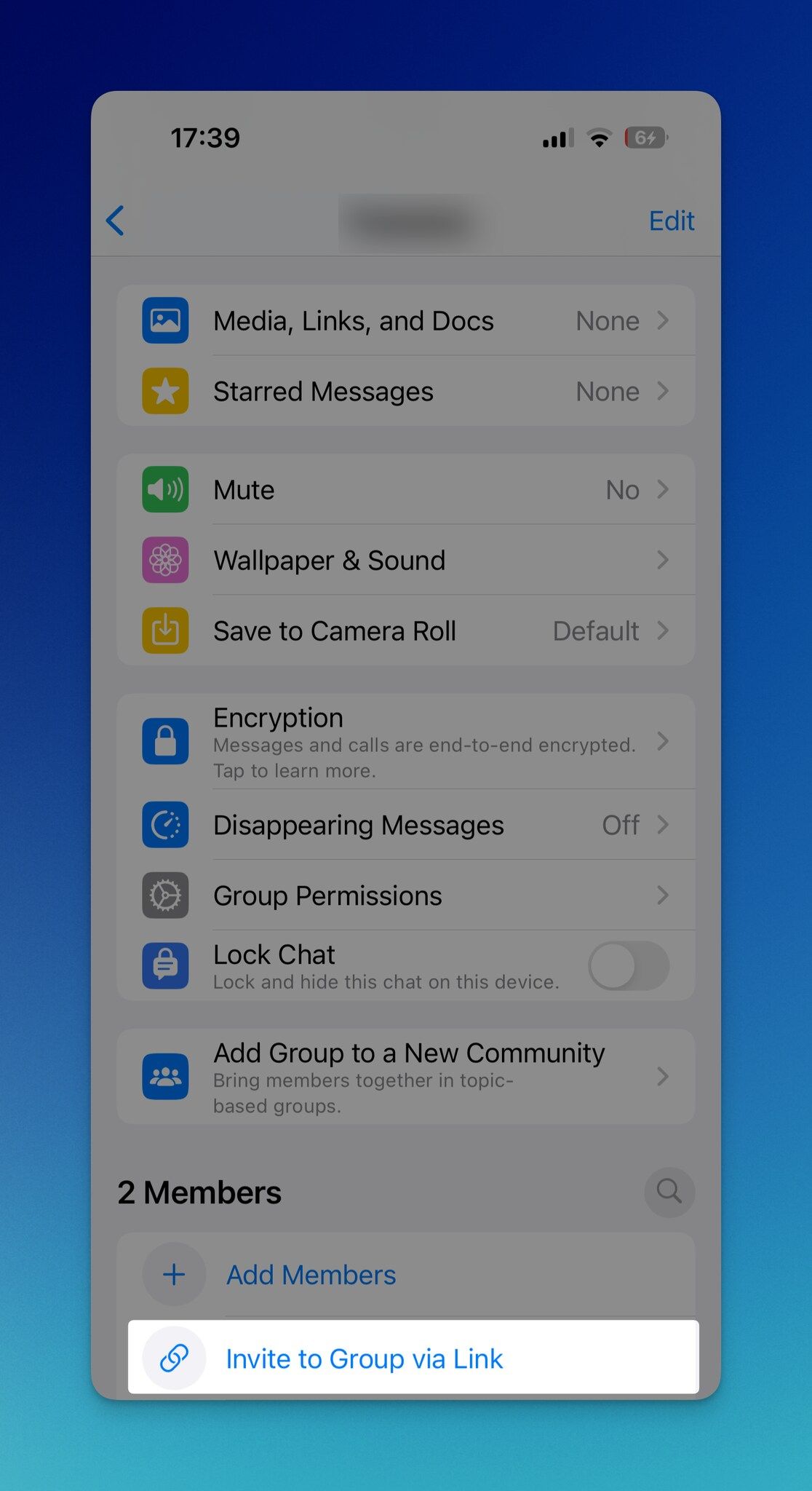
Step 4: Tap "Invite to Group via Link"
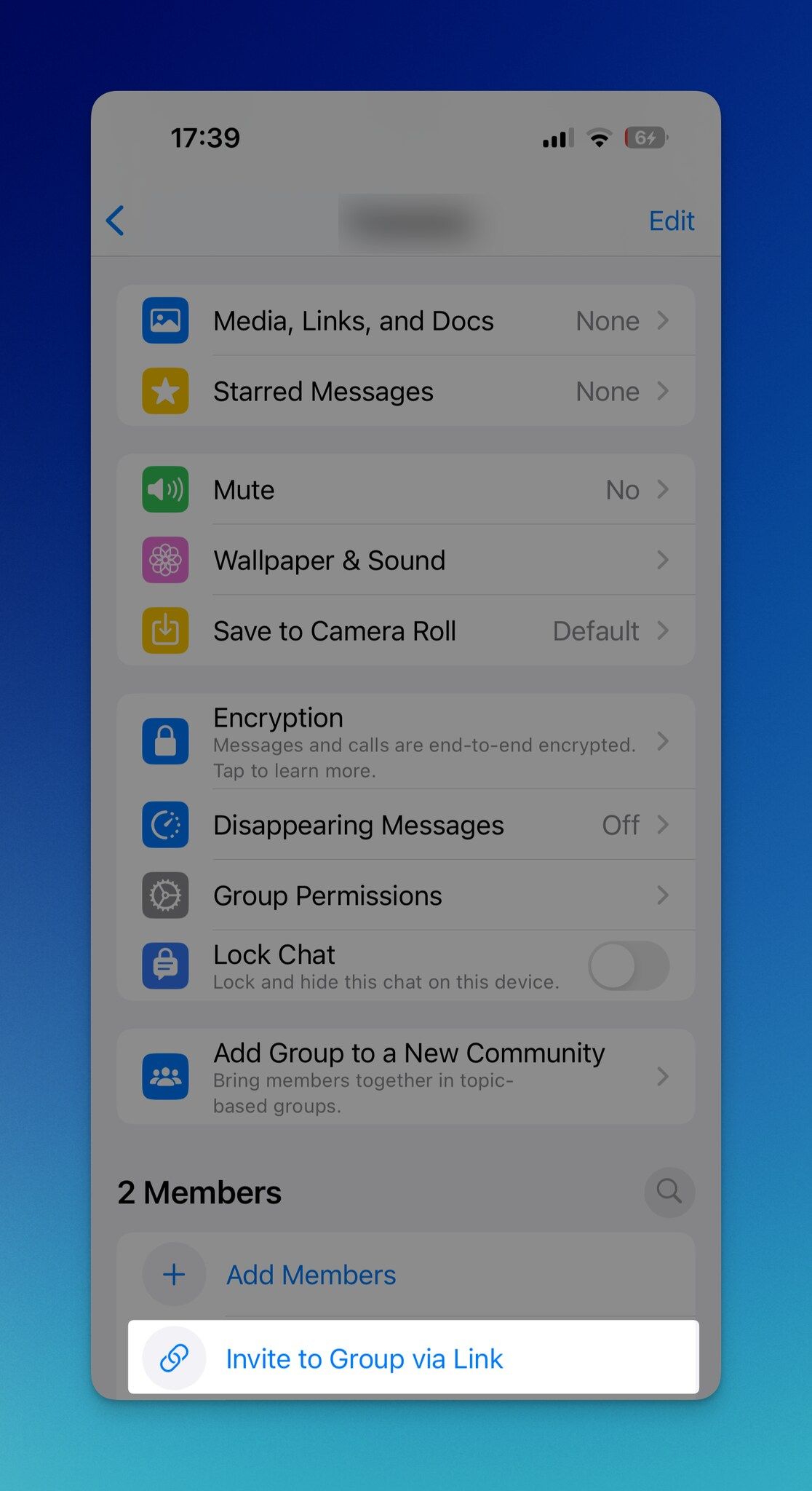
Scroll until you see Invite to Group via Link. Tap it. This panel exposes the shareable URL and, on the same screen, the QR option.
Step 5: Tap the QR Code Icon
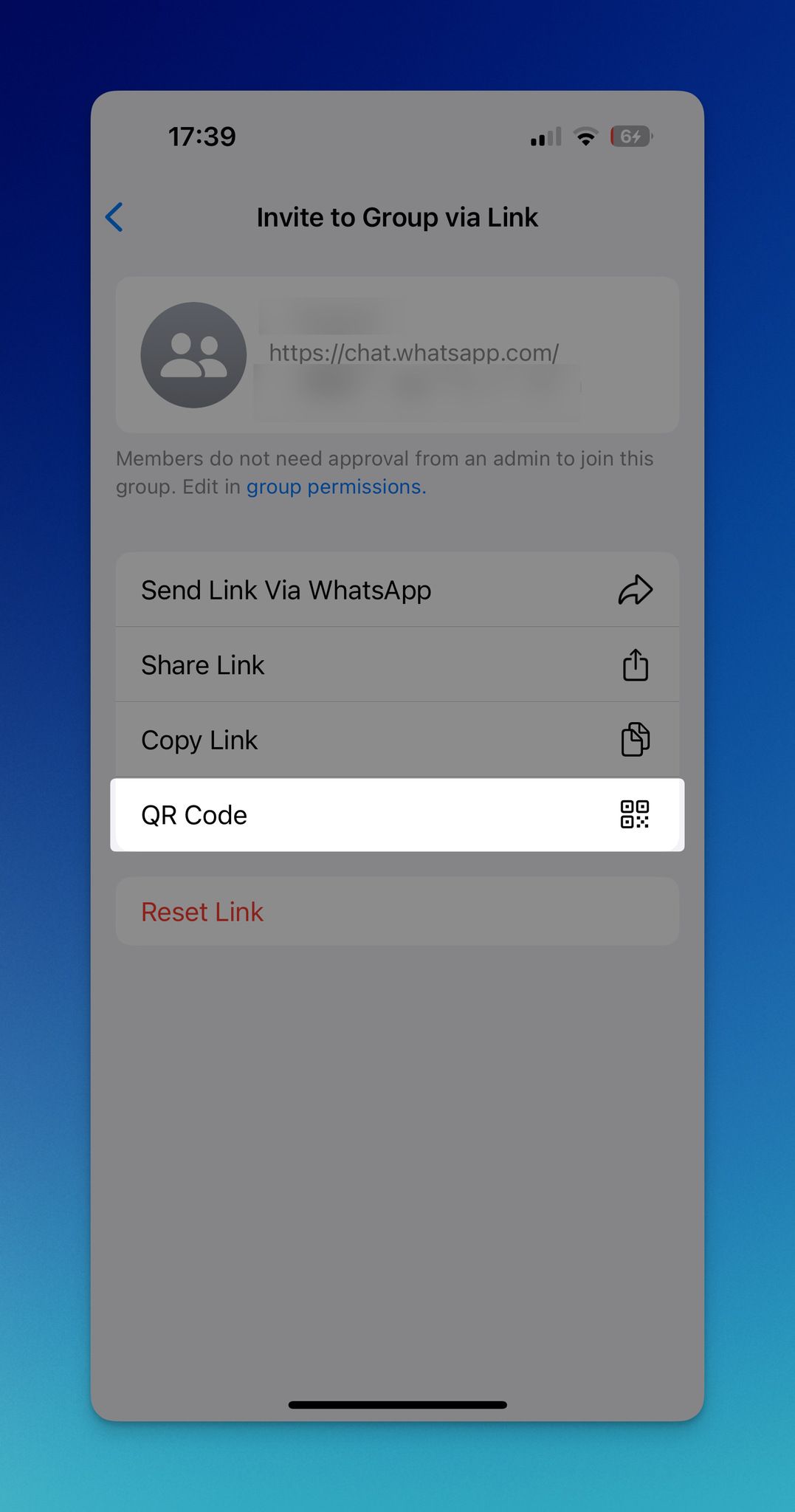
You'll see four options: Send Link via WhatsApp, Copy Link, Share Link, and QR Code. Tap QR Code, and WhatsApp pulls up a black-and-white code containing your group's invite URL.
Step 6: Save, Share, or Print the Code
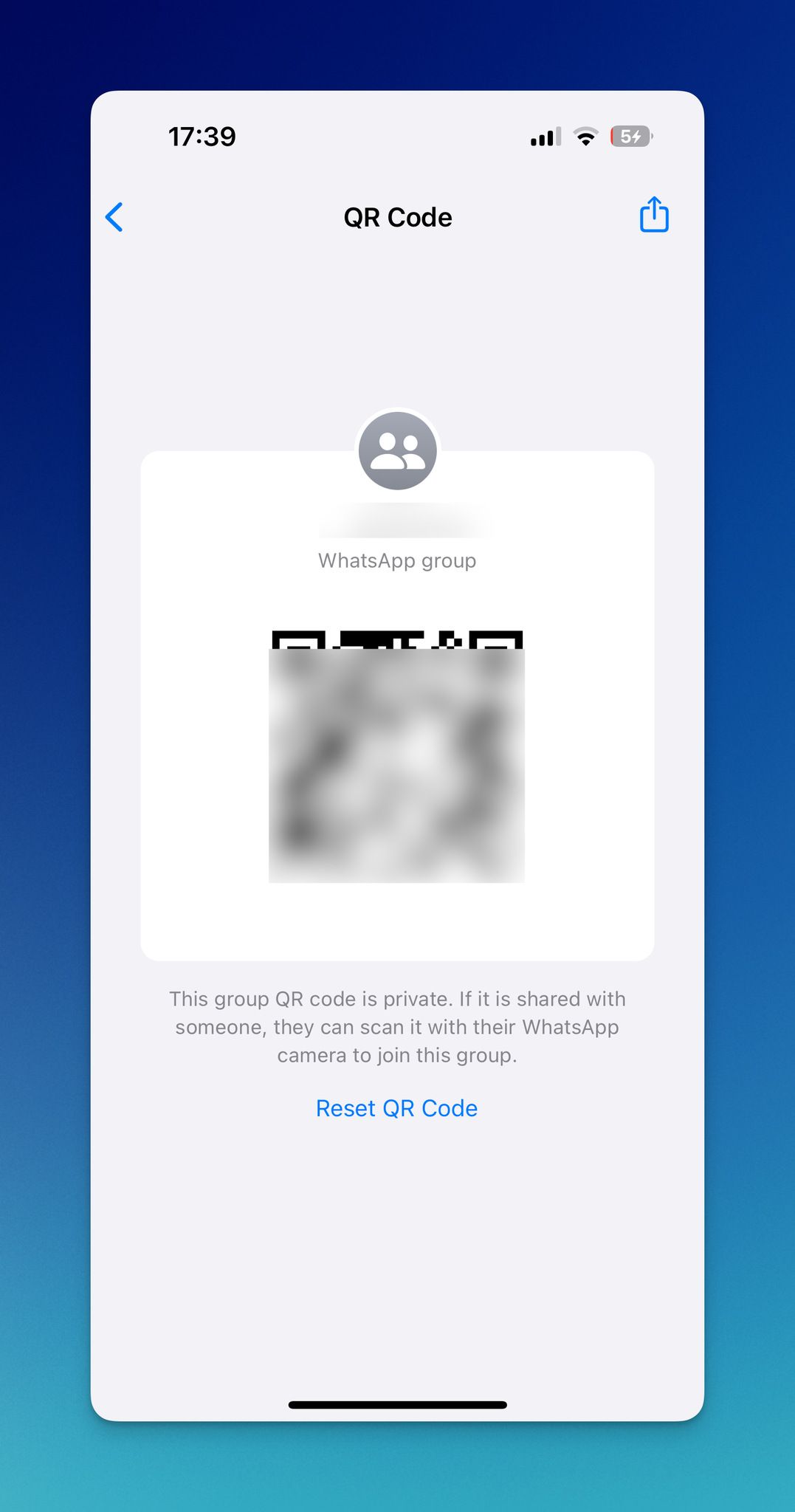
Tap Share to send via email, AirDrop, or another app. On iOS, save directly to Photos; on Android, use Save to Files or Save image. For print, export at the highest resolution your phone supports, anything under 300 DPI scans unreliably from posters.
Step 7: Decide Who Can Approve Joins
Heads up: Anyone who scans can request to join, so share selectively. Admins can approve or reject each request via the "Approve new participants" toggle (covered later).
Method 2: Create a Branded QR Code with QR Code Dynamic
WhatsApp's native code is plain black-and-white and can't be edited once printed. For a logo, brand colors, or scan analytics, use a third-party tool. Below uses QR Code Dynamic as the example, but the workflow holds anywhere.
Pro tip: Dynamic QR codes let you swap the destination link later without reprinting. Useful if you ever reset the invite or migrate to a new group. Static codes can't do this.
Step 1: Open QR Code Dynamic
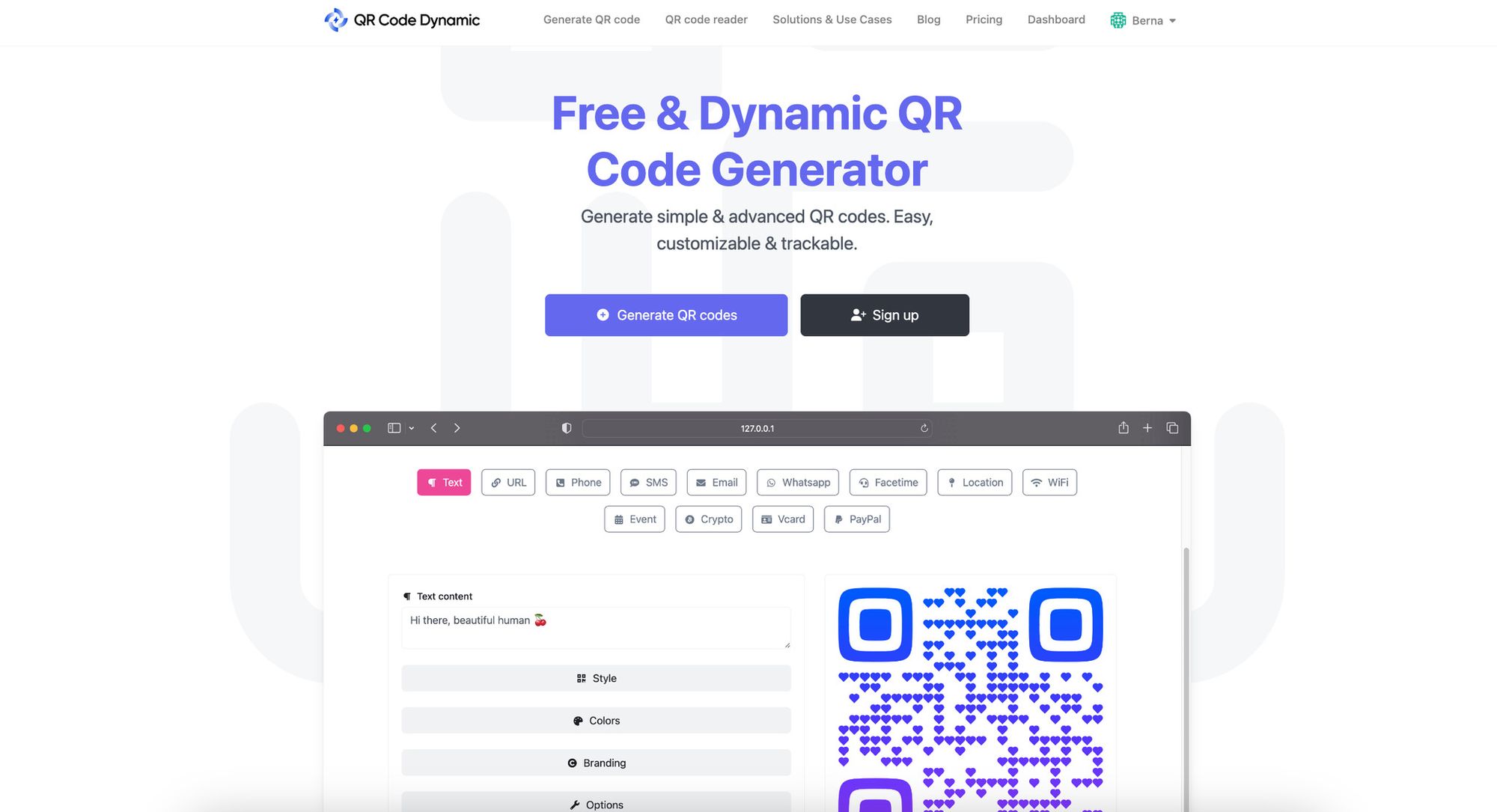
Go to QR Code Dynamic, sign up, and log in. The free tier covers static QR codes; dynamic codes sit on the paid plan.
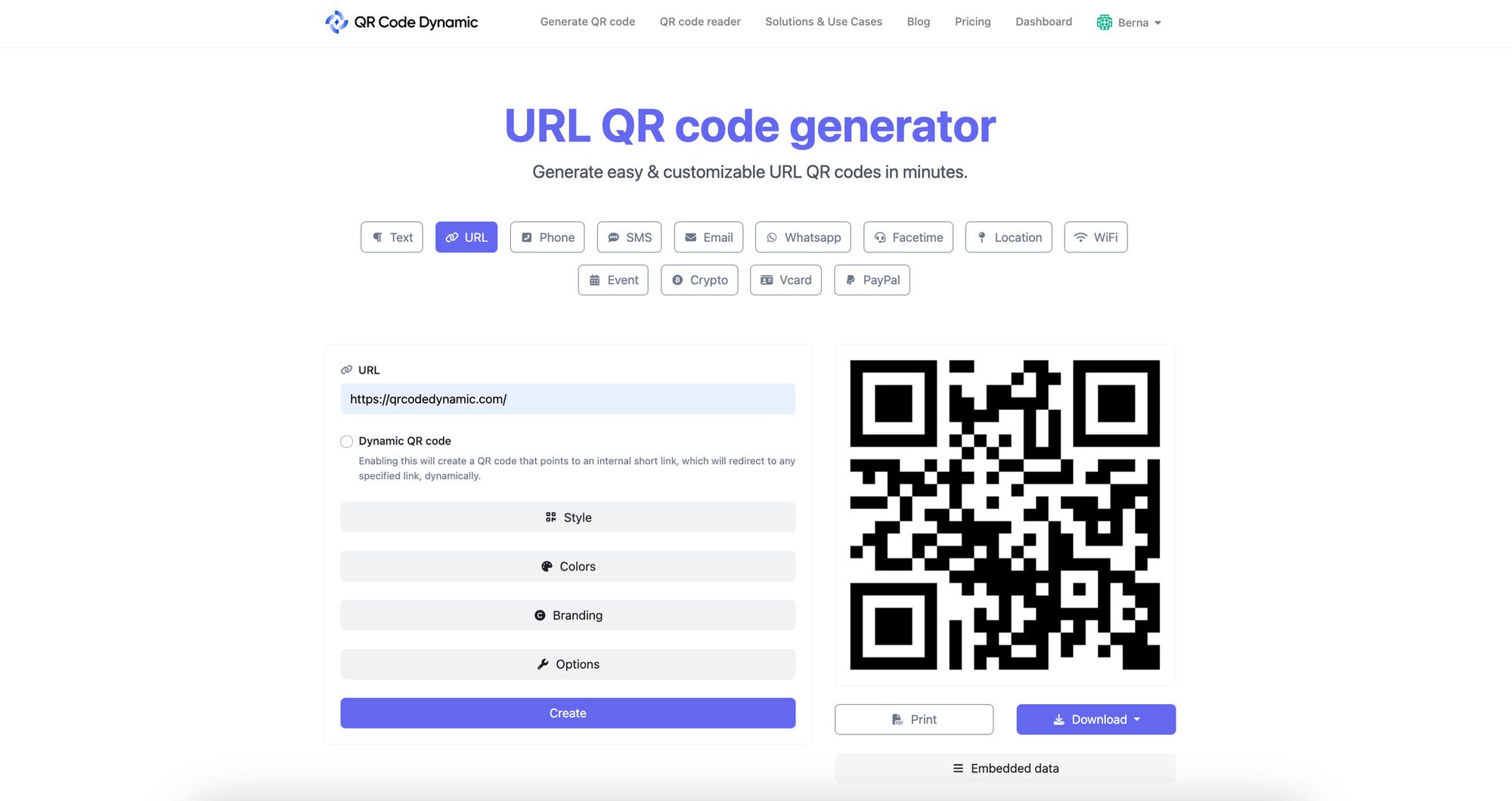
Step 2: Pick the URL QR Code Type
From the dashboard, choose URL. WhatsApp group invites are HTTPS URLs (chat.whatsapp.com/...), so URL is the right pick, not WhatsApp Chat (that's for 1:1 chats with a phone number). For other formats, see our breakdown of QR code types.
Step 3: Paste the WhatsApp Invite Link
Back in WhatsApp, open the Invite to Group via Link panel and tap Copy Link.
Switch back to QR Code Dynamic and paste it into the URL field.
Step 4: Customize Color, Logo, and Frame
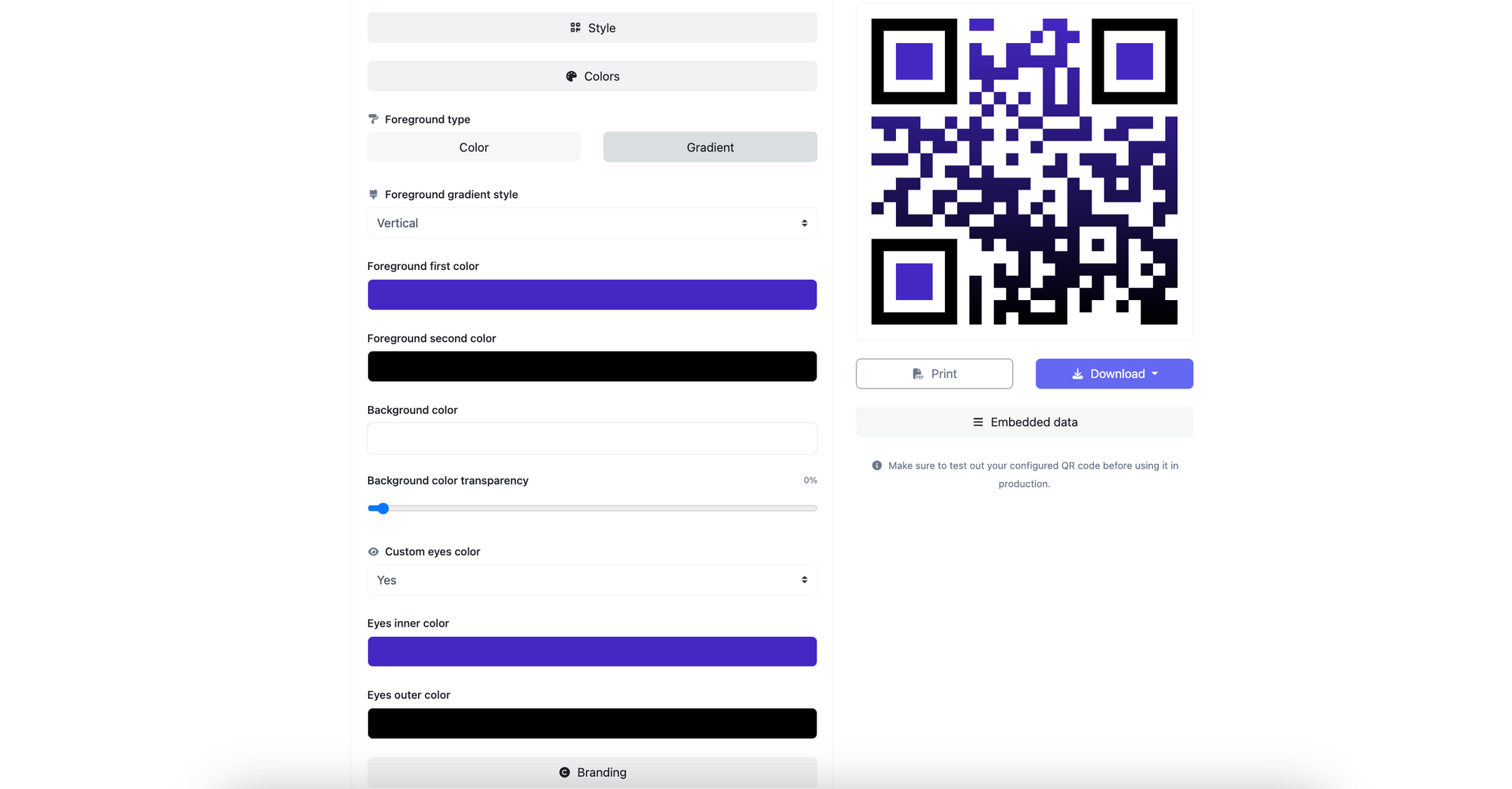
Adjust the foreground color (light backgrounds with dark codes scan best), drop in your logo at center, and pick an eye shape. If the QR will sit on a colored flyer, export with a transparent background. A "Scan to Join" frame caption lifts scan rate noticeably.
Step 5: Preview and Download
Scan the code with your own phone before exporting (this catches logos that block scanning). PNG is the safe default for digital; SVG is best for print because it scales without pixelation. JPG works for web but loses reliability if compressed.
Step 6: Place the QR Code Where People Will See It
Drop the QR onto flyers, business cards, packaging, or email signatures. For events, our QR code invitation templates give you ready layouts. Test the printed version in real lighting before going live.
Pro tip: If you want a 1:1 chat instead of a group, generate a WhatsApp QR Code with pre-filled message text. Customers scan and land in a chat with the message ready to send.
WhatsApp Business: Same Flow, Different Path
The WhatsApp Business app uses the same QR steps, but the menu sits one layer deeper because Business has its own Tools section. Per a Supercode messaging report, 175 million people send a message to a business on WhatsApp every day, and a lot of that traffic starts at a QR code. The Chatarmin business breakdown puts WhatsApp Business at 50 million companies and over 200 million active business accounts.
Step-by-Step in WhatsApp Business
- Open WhatsApp Business and tap the three-dot menu (Android) or Settings (iOS).
- Tap Settings then Business Tools (Catalog and Quick Replies live here).
- Exit Business Tools and head to Chats. Open the business group, tap the group name, then Invite to Group via Link.
- Tap QR Code, then save or share.
Why bother with Business if the group QR flow is identical? Three reasons:
- Verified profile: A green checkmark on your name lifts trust on every scan. People join groups from verified businesses faster than from personal accounts.
- Catalog and Quick Replies on the same number: The QR brings someone into the group; the same Business profile handles catalog browsing, FAQ replies, and order updates.
- Personal-work separation: Business sits on the same phone as regular WhatsApp without conflict. Work QR codes stay clean of personal contacts.
For B2B teams running customer or partner groups, this matters more than the cosmetics. WhatsApp's Business product page has the install link.
Comparing Native WhatsApp QR Codes vs. Third-Party Generators
Picking the right method depends on whether you want speed or control. Here's the honest tradeoff.
| Feature | Native WhatsApp QR | Third-Party Generator |
|---|---|---|
| Cost | Free | Free tier available; paid for dynamic codes and analytics |
| Customization | None (black-and-white only) | Color, logo, frame, eye shape, background |
| Editable destination | No, regenerate code if link changes | Yes, with a dynamic QR plan |
| Analytics | None | Scan count, location, device, time |
| Setup time | Under 30 seconds | 2-5 minutes including customization |
| Best for | Quick personal or one-off groups | Branded events, marketing campaigns, ongoing community building |
Use the native option for small groups, family chats, or one-time events where tracking doesn't matter. Use a third-party generator for posters, business cards, packaging, or anywhere you'd want scan data. The same logic applies if you're making a Telegram QR code.
Troubleshooting Common WhatsApp Group QR Code Issues
Most QR failures fall into seven patterns. Here's how to fix each.
- Won't scan at all: Image is blurry or too small. Re-export at 1000x1000 px minimum and check that no logo covers more than 30% of the code area.
- Scan opens browser, not WhatsApp: User doesn't have WhatsApp installed. Add a fallback near the code: "Don't have WhatsApp? Install free at whatsapp.com."
- Invite link expired: An admin reset the link, killing every QR built from the old one. Regenerate the QR using the new link.
- Won't scan in dim lighting: Camera-roll workaround, save the QR image, then in WhatsApp tap the camera icon and scan from your photo library. Fixes glare-washed printed codes.
- Group is full: Groups cap at 1,024 members. New scanners get an error. Spin up a second group or remove inactive members.
- Group banned or suspended: If the group violated WhatsApp's terms, the invite link dies. Check the admin's email for a ban notice and appeal in-app.
- Outdated WhatsApp version: The QR panel moved twice in two years. Update from the official downloads page.
Heads up: Low-resolution QRs are the most common failure we see. Anything you'll print should start at 1000x1000 px or use SVG. Screen-only can be smaller, but never below 300x300.
Best Practices for WhatsApp Group QR Code Creation and Sharing
Placement and presentation control how many people actually scan. The shortlist:
- Resolution and contrast: 300 DPI minimum for print. Dark code on light background scans best; if you invert, test on three devices first.
- Privacy: Share QRs only with intended audiences. Reset the link after major events so old QRs (saved to camera rolls, posted in screenshots) stop working.
- Add a caption: "Scan to join our WhatsApp group" lifts scan rate noticeably for less tech-comfortable audiences.
- Match the tone: Branded QR for B2B; plain or playful for friends and family. The QR sets expectations for the group.
- Test on three phones: One iPhone, one recent Android, one older Android. All three should scan in under 2 seconds.
- Welcome new members: The first message joiners see should explain the group's purpose and rules. Otherwise scan-and-leave rates climb.
- Lock down posting: Admins can restrict who sends messages or edits info. Use this on QR-public groups to block spam.
- Track when you can: Third-party scan analytics tell you if a poster is in the wrong spot, not whether the QR itself works.
How to Use a WhatsApp Group QR Code Effectively

Generating the code is half the job. Placement and rollout are the other half.
For Group Admins
- Distribute on purpose: Email signatures, posters, packaging, social posts. The QR needs context to do its job.
- Pair with a clear call: "Scan with your phone's camera to join" beats a bare image. Put it next to the code, not buried below.
- Approve quickly: Members who wait 24+ hours for approval often go silent. Aim for under 6 hours during business hours.
- Reset when leaked: If the QR ends up in screenshots or public posts, reset the link. Old QRs die instantly.
For New Members
- Use your built-in camera: iPhone Camera and most Android cameras detect QR codes natively. Point, wait for the banner, tap.
- Scan from a saved image: Screenshot the QR, open WhatsApp, tap the camera icon, then the photos icon, and pick the screenshot.
- Tap the prompt: Confirm to join the group (or land in the approval queue).
- Introduce yourself: A quick "just joined, glad to be here" beats lurking.
Real-World Examples
- Retail product launches: A Bangalore electronics retailer stuck a QR on every box at a 2024 launch. It pulled 200+ customers into a support group in three days and cut manual invites by roughly 80%.
- University onboarding: A UK university printed QR codes onto 2024 orientation packets. Sign-ups to year-cohort groups jumped about 50% over the prior year's link-only flow.
Pro tip: For time-sensitive events, pair the QR with a deadline ("Scan by Friday for early-bird"). Urgency lifts scan rates more than design polish.
WhatsApp Group Admin Controls: Reset Link and Approve New Participants
Two admin settings decide whether your QR-driven group stays useful or turns into a spam pit. Both sit inside Group Info, and both are underused.
Resetting the Group Invite Link
Whenever you reset the invite link, every QR code generated from the old link stops working immediately. Use this when:
- The QR ended up somewhere public you didn't intend (screenshot leak, forwarded to a third party).
- An event ended and you don't want stragglers joining months later.
- You're seeing a spike in spam join requests, often a sign the QR is being scraped by bot networks.
To reset: open Group Info, tap Invite to Group via Link, then tap Reset Link at the bottom. The new link replaces the old one instantly. If you used a dynamic third-party QR, update the destination to the new link, the QR image stays the same. If you used a static QR or the native WhatsApp QR, you'll need to regenerate and reprint.
Approve New Participants Toggle
WhatsApp added admin approval for joins in late 2022, and it's the single best anti-spam control for QR-driven groups. With it on, every scanner who follows the QR ends up in a queue rather than the group. Admins see a "Pending requests" list inside Group Info, where each request can be accepted or rejected.
To turn it on: Group Info, then Group Settings (or Group Permissions on Android), then Approve new participants. Toggle on. Existing members aren't affected; only new joiners hit the queue.
The tradeoff is admin workload. If you expect 500+ scans in a week, approving each one manually is painful. For those volumes, leave it off and rely on a clear group description plus aggressive moderation in the first 24 hours.
WhatsApp QR Scams to Watch For
The same growth that makes group QRs useful also makes them a vector for scams. The pattern almost always looks the same: a fake QR posted in a public space (cafe table, ATM, parking meter, gym wall) leads to a WhatsApp group impersonating a popular brand, bank, delivery service, or government agency. Once you're in, the scammer either harvests info, runs a "claim your free X" social-engineering play, or links out to malware.
Signs the QR group isn't legitimate:
- The brand wouldn't actually use a public QR: Banks, government tax offices, and delivery couriers don't ask you to join a WhatsApp group. If a QR claims to lead to one, it's fake.
- "Scan to claim free X": Free iPhones, free crypto, free Amazon vouchers, free shipping. If the QR is selling something for nothing, the price is your data or your money.
- Group name spelled almost-but-not-quite right: "Amaz0n Support," "WhatsApp Updates," "Apple Care Official." Real brands rarely run public-scan WhatsApp groups, and when they do, the names are clean.
- Pressure to act fast: "Limited slots, scan now." Urgency is the most common scam tell.
- Group asks for OTPs, passwords, or banking info: WhatsApp groups should never be doing this. Leave immediately.
If you scanned a malicious QR and joined a sketchy group: leave the group, block the admin (long-press their name, then Block), report the chat (Group Info, then Report Group), then delete the chat. If you shared any info, treat it as compromised, change relevant passwords, and watch for follow-up phishing in email or SMS.
Communities and Channels: Where QR Codes Fit (and Don't)
WhatsApp added Communities in 2022 and Channels in 2023, and the QR story for each is different from regular groups.
Communities are clusters of related groups (like a school's parent groups, year groups, and announcements) under a single umbrella. Communities use invite links, not native QR codes. Admins share the link, and members tap to join the announcement group, then optionally join sub-groups. If you want a QR for a Community, you'd generate it from the invite link using a third-party tool, the QR encodes the URL the same way a group QR does. There's no Community-specific QR panel inside WhatsApp yet.
Channels are one-to-many broadcast feeds (creators, brands, sports teams, news outlets) where followers receive updates but can't reply. Channels can be shared via link or QR; the link looks like https://whatsapp.com/channel/... and works the same way as a group invite from a QR-generation perspective. Native QR display for Channels rolled out gradually; in markets where it's not yet on the menu, copy the channel link and generate a QR with a third-party tool.
Pick the right surface for the job. Groups are for back-and-forth among a small-to-medium audience. Communities are for nested groups with announcements at the top. Channels are for one-to-many broadcasts with no chat. Then generate the QR from whichever invite link applies, the QR mechanics are identical, only the chat dynamics change.
Benefits of Using QR Codes for WhatsApp Groups

The reasons people switch from manual invites to QR codes are mostly practical. Six stand out.
Simplified Group Management
QR codes replace one-by-one invites. For a 200-person event, that's 200 manual sends collapsed into one printed code. Admins reclaim the time.
Tighter Privacy Control
Sharing a QR selectively (with a known audience, on a poster at a private event) is more controllable than a link forwarded endlessly. Reset the link after the event ends, and old QR images go dead.
Faster Setup
Native QR generation takes under a minute. Branded QR generation takes five. Either beats writing or copying invite links manually.
Better Member Experience
Most people aged 12 to 70 know how to scan a QR code by 2026. Tap-to-join is one fewer friction point than tap-link-then-confirm. For older audiences, "open camera, point, tap" is a clearer instruction than "find my WhatsApp message and tap the link."
Format Flexibility
The same QR works on a poster, a sticker, a business card, a digital invitation, or an email signature. One asset, many surfaces.
Scan Analytics with Dynamic Codes
Dynamic QR codes track how many people scanned, when, and roughly where. For a marketing team, that turns "did the campaign work" from a guess into a data point. Static QR codes (including WhatsApp's native one) don't offer this.
The Bottom Line on WhatsApp Group QR Codes
QR codes are the simplest way to bring people into a WhatsApp group at scale. The native option costs nothing and takes 30 seconds. A third-party tool adds branding, analytics, and editable destinations for the price of a few extra clicks. WhatsApp Business follows the same flow with a verified profile attached. Communities and Channels use invite links you can wrap in a QR with any URL generator.
If you're starting from scratch, generate the native QR first, test it with three phones, then upgrade to a branded version once you know the group is going to keep running. Keep an eye on join requests, reset the link when it leaks, and watch for fake-brand QR scams in public spaces. That's the entire playbook.
Frequently Asked Questions
Is it safe to use QR codes for WhatsApp groups?
Yes, QR codes for WhatsApp groups are safe when shared with the audience you intend. The risk shows up when the QR ends up somewhere public, anyone who scans can request to join. Reset the group invite link any time the QR has leaked, and turn on "Approve new participants" to vet every join manually. The QR itself is just an image of the invite URL; it can't carry malware on its own.
Can anyone join my WhatsApp group with the QR code?
Anyone with the QR image can request to join. As an admin you can approve or deny each request individually if the "Approve new participants" toggle is on (Group Info, then Group Settings). Without it, scanners join straight away. For private groups, leave the toggle on and check the pending queue daily.
Can I customize the appearance of my WhatsApp group's QR code?
WhatsApp's built-in QR is plain black-and-white with no edits available. For brand colors, a logo, or a frame with a call-to-action, paste the group invite link into a third-party generator like QR Code Dynamic. The generator outputs a styled QR pointing to the same WhatsApp invite, so functionality is identical, only the look changes.
How do I scan a WhatsApp group QR code?
On most modern phones, open the built-in camera app and point it at the QR. A banner appears at the top; tap it to open WhatsApp and confirm joining the group. If your camera doesn't auto-detect QR codes (rare on iOS 11+ and Android 8+), open WhatsApp, tap the camera icon, point at the code, and scan from there.
Can you make a QR code for a group chat?
Yes, but only for WhatsApp groups, not for individual one-on-one chats by default. Open the group, tap the group name, then Invite to Group via Link, then QR Code. Save or share. For 1:1 chats, you'd need to generate a wa.me link with the contact's number using a tool like the WhatsApp QR generator, then convert that to a QR.
Is there a free way to create a QR code for WhatsApp group?
Yes. WhatsApp's built-in QR (Group Info, then Invite to Group via Link, then QR Code) is free and takes under a minute. Most third-party QR generators also have a free tier for static codes; the paid plans cover dynamic codes (editable destinations) and scan analytics. For a one-off group, the native option is enough. For ongoing campaigns where you'll want to track scans, a free third-party static code with no analytics is a middle ground before paying for dynamic.
Discover our other blog posts before you go:

I work as a Growth Marketer at Popupsmart, using my 3+ years of SaaS experience to create clear, useful marketing content that helps brands grow, reach the right audiences, and improve their results.